Corva API
The Corva API is the programmatic interface to data and resources available in the Corva platform. Customers use it to connect external systems, build analytics and exports, automate workflows, and power Dev Center applications without manually retrieving information through the Corva user interface. The Platform API provides wells and their operational relationships; the Data API provides the time-, depth-, completion-, and reference-based dataset records associated with those assets. Most integrations use both APIs: first identify an asset, then query its data.
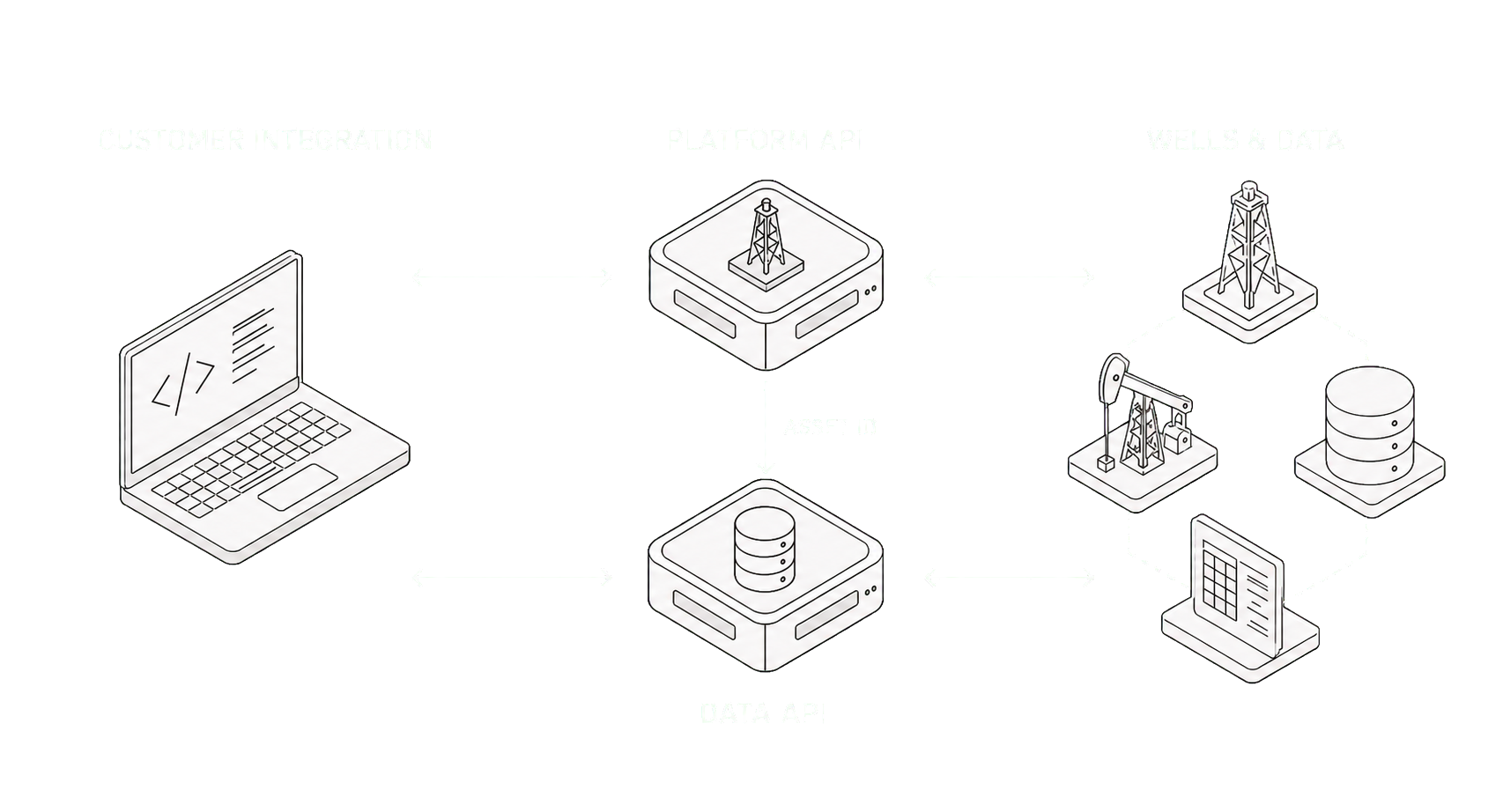
Which API do I use?
| You want to… | Use |
|---|---|
| Find wells, rigs, programs, pads, frac fleets, or drillout units | Platform API at https://api.corva.ai |
| Read or write permitted time, depth, engineering, or reference datasets | Data API at https://data.corva.ai |
| Receive new records in a Dev Center frontend app | Data API for initial data, then socketClient for updates |
| Call either API from a Dev Center frontend app | corvaAPI or corvaDataAPI from @corva/ui |
See Choose the Right API for a fuller comparison.
Typical request flow
- Choose an API key or Bearer token and store secrets outside your source code.
- Query the Platform API for the well or other asset you need. For wells, choose
/v2/wellsor/v2/assetsbased on the workflow. - Read
attributes.asset_idfrom a/v2/wellsresponse, or the top-levelidfrom a/v2/assetsresponse. - Pass that
asset_idin a Data API dataset query. - Page through additional records or subscribe to new data when required.
Follow the Quickstart. It uses small responses and copyable examples so you can verify access before building a larger integration.
Endpoint references
These maintained references preserve the parameter tables, examples, and representative responses needed for common customer workflows:
The Swagger interfaces remain available as supplemental interactive explorers, but generated parameter descriptions and examples may lag behind the services.